
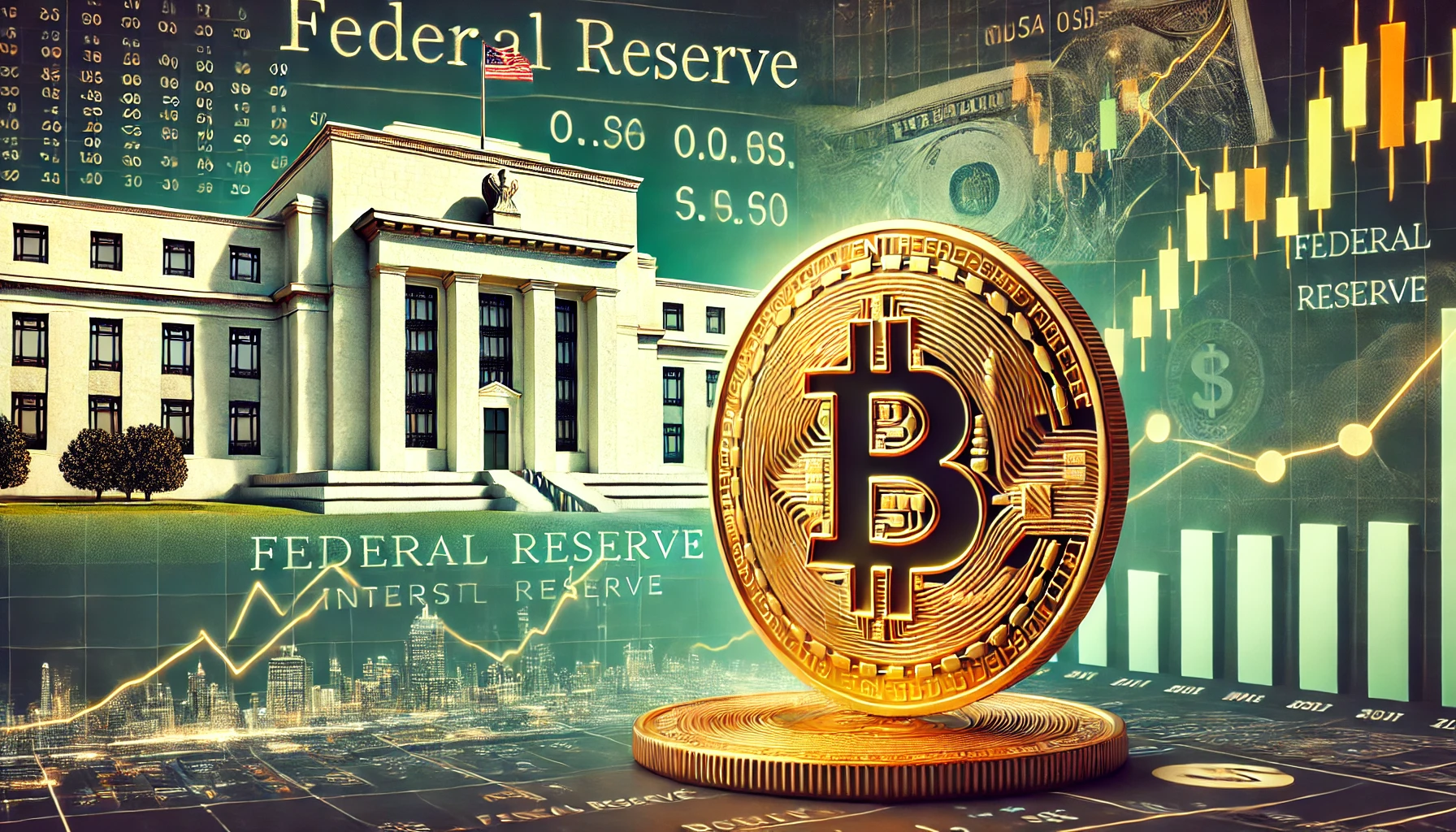
How Fed Interest Rate Cuts Have Shaped Bitcoin and the Crypto Market
Since the introduction of Bitcoin in 2009, its journey has unfolded against the backdrop of numerous economic events, particularly decisions by the Federal Reserve (Fed). The Fed’s policies, particularly its manipulation of interest rates, have had substantial implications for both traditional financial markets and the emerging cryptocurrency sector. This blog takes a look at the Fed’s history of interest rate cuts since Bitcoin’s inception and how these moves have impacted Bitcoin and the broader crypto market.
The Fed’s Role in Interest Rates
The Federal Reserve, as the central bank of the U.S., uses interest rates as a tool to influence the economy. When the economy slows, the Fed typically cuts interest rates to make borrowing cheaper, encouraging spending and investment. Conversely, during economic booms or periods of inflation, the Fed raises interest rates to control excessive growth.
Since Bitcoin came into existence in 2009, the Fed has employed this strategy numerous times, particularly following the financial crisis of 2008, the COVID-19 pandemic, and other economic shocks. Each of these rate adjustments has directly and indirectly influenced financial markets, including cryptocurrencies.
Early Bitcoin Days (2009-2016): Bitcoin Emerges as a Niche Asset
In its early years, Bitcoin was largely seen as a niche asset and wasn’t immediately impacted by Fed policy shifts. During this time, the Fed maintained low interest rates to spur recovery after the 2008 financial crisis. The period of low rates (2009-2015) saw the dollar remain weak, but Bitcoin was still in its infancy, with price movements largely driven by early adopters, technological developments, and regulatory news.
However, as the crypto market began gaining traction in the mid-2010s, it started to correlate with broader macroeconomic trends.
The 2017 Bitcoin Boom and Fed Tightening Cycle
2017 was a breakthrough year for Bitcoin as it gained mainstream attention and soared from $1,000 to nearly $20,000 by the end of the year. This parabolic rise came at a time when the Fed was gradually increasing interest rates after a prolonged period of near-zero rates.
While Bitcoin’s meteoric rise in 2017 was primarily fueled by speculative interest, the tightening monetary policy indicated that traditional asset investors were searching for alternative stores of value in anticipation of higher borrowing costs. Bitcoin’s decentralized nature and its perception as "digital gold" attracted investors looking to hedge against inflation and currency devaluation.
The COVID-19 Pandemic and Fed’s Historic Rate Cuts (2020-2021)
One of the most impactful periods for both the Fed and Bitcoin was the COVID-19 pandemic. In early 2020, as the global economy came to a halt, the Fed slashed interest rates to near-zero and initiated unprecedented quantitative easing (QE) programs. These actions flooded the economy with liquidity to prevent a financial collapse, but they also had unintended consequences on the cryptocurrency market.
With money becoming essentially "free" to borrow, institutional investors turned their eyes toward alternative assets, such as Bitcoin, to hedge against potential inflation caused by the massive money supply increase. Consequently, Bitcoin experienced an incredible bull run, reaching an all-time high of over $60,000 in 2021. Investors viewed Bitcoin as a hedge against fiat currency devaluation, spurred on by inflation fears caused by the Fed’s aggressive monetary easing.
2022-2023: Fed’s Rate Hikes and Crypto Winter
In 2022, the Fed reversed course, increasing interest rates rapidly to combat the highest inflation in decades. This tightening cycle directly impacted risk-on assets like cryptocurrencies. Higher interest rates made borrowing more expensive, reducing liquidity in the financial system. As a result, Bitcoin’s price plummeted from its highs, entering what is known as "crypto winter."
The crypto market’s reaction to these rate hikes highlighted how closely it had become linked with traditional financial markets. When interest rates rise, investors often flee from riskier assets like tech stocks and cryptocurrencies, favoring safer investments such as bonds and the U.S. dollar.
Conclusion: Fed Policies and Bitcoin’s Future
Over the years, Bitcoin and the broader crypto market have increasingly reacted to the Fed’s monetary policies. Rate cuts and periods of loose monetary policy tend to create favorable conditions for Bitcoin, as liquidity flows into riskier assets. Conversely, rate hikes and tighter financial conditions reduce risk appetite and pull down Bitcoin's price.
As Bitcoin continues to evolve, its sensitivity to macroeconomic conditions is likely to persist. However, as it matures as an asset class, its role in the global financial system may become more defined, possibly decoupling from traditional financial market reactions over time. Whether as a hedge against inflation, a speculative investment, or an emerging store of value, Bitcoin’s future remains deeply intertwined with global economic trends, including the Fed’s actions.