
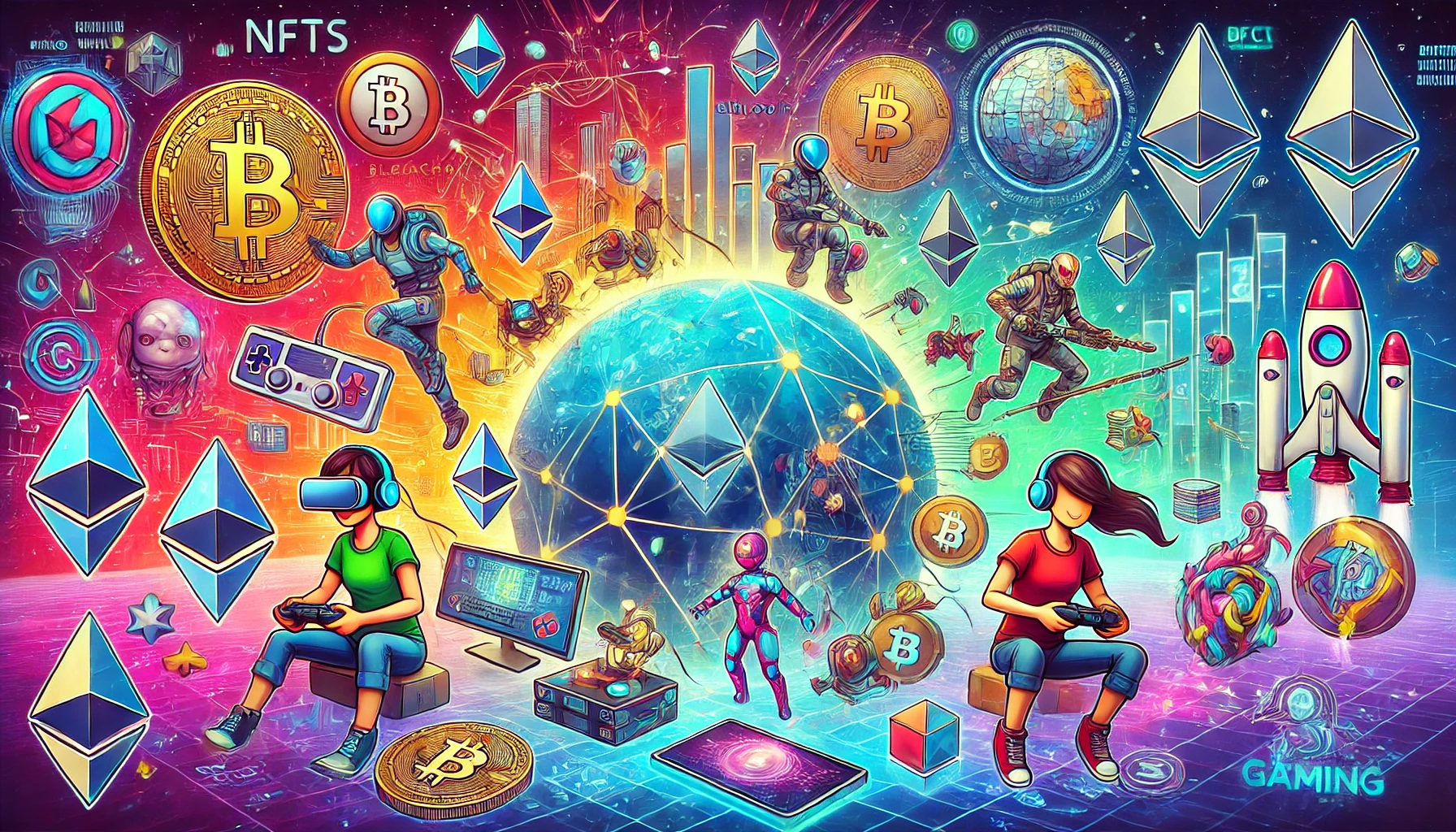
The Booming Crypto Gaming Sector: One of the Hottest Topics This Year
The convergence of blockchain technology and gaming has created one of the most exciting and rapidly growing sectors in the crypto market. Often referred to as “GameFi” (a blend of gaming and decentralized finance), this sector has gained significant traction in 2023, captivating both gamers and investors alike. But why has crypto gaming become such a hot topic this year, and what are the driving forces behind its explosive growth?
The Rise of Play-to-Earn and NFTs in Gaming
The concept of “play-to-earn” has transformed the traditional gaming industry. Unlike conventional games where players spend money without any financial return, play-to-earn games enable users to earn cryptocurrencies or NFTs (non-fungible tokens) by participating in gameplay. This model allows gamers to monetize their time and skills, making gaming not just a hobby but a potential source of income.
Axie Infinity, one of the most popular play-to-earn games, set the stage for this revolution. Players can earn tokens by breeding, battling, and trading virtual creatures called Axies. This model proved to be a game-changer, particularly in regions with high unemployment, where people turned to Axie Infinity as a viable income source. The success of Axie Infinity sparked a wave of similar projects, bringing mainstream attention to the potential of blockchain in gaming.
The Role of NFTs in Game Assets
NFTs have also played a pivotal role in the growth of crypto gaming. In traditional games, in-game assets such as skins, weapons, or characters are usually owned and controlled by game developers. However, in blockchain-based games, these assets are represented as NFTs, giving players true ownership and the ability to trade them on decentralized marketplaces. This creates a whole new economy around gaming, where virtual items have real-world value.
This year, several high-profile NFT-based games have been released, each offering unique gameplay mechanics and economic models. These games attract not only traditional gamers but also crypto enthusiasts and investors who see the potential for profit in this new market.
Major Investments and Partnerships
The surge in interest around crypto gaming has not gone unnoticed by big players in both the gaming and financial industries. In 2023, we’ve seen a flurry of investments, partnerships, and acquisitions involving blockchain gaming companies. Major venture capital firms, gaming giants, and even traditional tech companies have entered the space, recognizing the disruptive potential of blockchain technology in gaming.
For example, Ubisoft, one of the world’s leading game publishers, has been exploring blockchain integrations, while companies like Animoca Brands have raised significant funding to expand their blockchain gaming portfolios. These developments have helped legitimize the sector and attract more talent and innovation.
The Appeal of the Metaverse
The concept of the metaverse has further fueled the hype around crypto gaming. The metaverse envisions interconnected virtual worlds where people can socialize, work, and play in a digital environment. Gaming is expected to be a central component of the metaverse, and blockchain technology provides the infrastructure for virtual economies and true ownership of digital assets.
Platforms like Decentraland and The Sandbox are at the forefront of this movement, offering virtual real estate, games, and experiences powered by blockchain. As more people and companies build in these virtual spaces, the potential for a robust metaverse economy grows, with gaming as a primary driver.
Challenges and the Road Ahead
Despite the rapid growth and excitement, the crypto gaming sector faces several challenges. Scalability, user experience, and regulatory uncertainty are significant hurdles. Many blockchain games still struggle with high transaction fees and slow processing times, which can hinder mass adoption. Additionally, the regulatory landscape for play-to-earn models and NFTs is still evolving, with potential implications for how these assets are classified and taxed.
However, the long-term potential remains promising. As blockchain technology continues to evolve and mature, we can expect improvements in scalability and user experience. Moreover, the ongoing development of layer-2 solutions and cross-chain interoperability could address many of the current limitations.
The gaming sector of the crypto market is one of the hottest topics this year because it represents a fusion of entertainment, finance, and digital ownership that was previously unimaginable. The rise of play-to-earn models, the integration of NFTs, significant investments, and the growing interest in the metaverse are all contributing factors to this explosive growth.
As more players, developers, and investors enter the space, the future of crypto gaming looks incredibly bright. Whether you’re a gamer, a developer, or just curious about the possibilities, this is a sector worth watching closely as it continues to evolve and redefine the boundaries of both gaming and finance.